
Spain’s diverse regions offer distinctive experiences, from architectural marvels to beachside retreats and historic cultural capitals. These 15 cities provide first-time visitors with an authentic introduction to Spain’s varied landscapes, traditions, and gastronomy. Each destination can serve as a standalone experience or as part of a comprehensive Spanish itinerary.
1. Barcelona
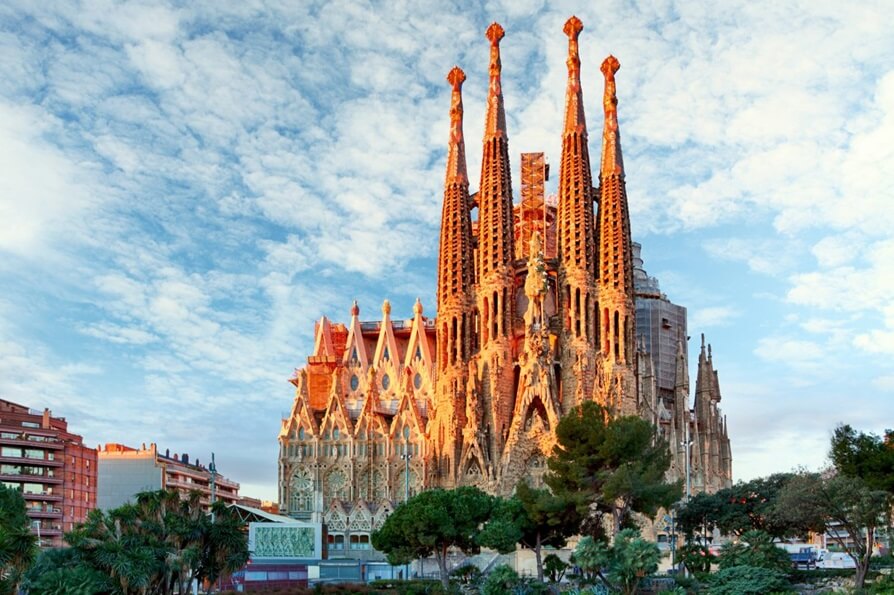
Barcelona stands as Spain’s gateway for most international visitors, offering an unmatched blend of cutting-edge modernity and historical depth. The city’s most iconic draw is Antoni Gaudí’s Sagrada Familia, a breathtaking basilica still under construction with an estimated completion in 2026. Reservations sell out months in advance, so book at least three months ahead.
Beyond this masterpiece, visitors can explore Park Güell, another Gaudí creation featuring mosaic-covered structures overlooking the Mediterranean, and Casa Batlló, showcasing his distinctive architectural style. Las Ramblas, a famous tree-lined promenade through the city center, buzzes with street performers, markets, and shops.
The Gothic Quarter reveals medieval alleys and Barcelona’s Cathedral north of the Old Town. Montjuïc offers one of the city’s best sunsets with panoramic views. Barcelona’s vibrant nightlife, world-class restaurants, and beautiful beaches make it ideal as a starting point, requiring 3–6 days depending on your itinerary. The city hosts the La Mercè festival in September, transforming streets with cultural performances and fireworks.
2. Madrid
As Spain’s capital, Madrid radiates energy and cultural sophistication. The Prado Museum ranks among Europe’s premier art institutions, housing masterpieces by Velázquez, Goya, and El Greco. The museum alone could occupy an entire day for art enthusiasts.
Madrid’s other major attractions include the Royal Palace, Europe’s largest functioning palace with opulent rooms and gardens, and the historic Plaza Mayor encircled by Renaissance arcades. Retiro Park serves as Madrid’s “Green Lungs,” providing an urban oasis with the stunning Palacio de Cristal (Crystal Palace), a glass pavilion from 1887 now used for exhibitions. The neighborhood of La Latina overflows with tapas bars where locals gather for traditional Spanish snacks.
Madrid’s walkable center and energetic atmosphere make two days the minimum to cover major attractions, though three to four days allows for leisurely exploration. The city offers direct train access to Toledo, making it an excellent base for day trips.
3. Seville
Seville represents the heart of Andalusian culture, famous as the birthplace of flamenco and home to Spain’s most passionate traditions. The city is safe, walkable, and incredibly beautiful, with distinct neighborhoods to explore.
The Seville Cathedral, the largest Gothic cathedral in the world, dominates the skyline and holds the official tomb of Christopher Columbus. Its attached Giralda Tower offers breathtaking panoramic views over the city and surrounding countryside. The Real Alcázar, an ornate royal palace complex built in 1364, showcases Moorish and Gothic architecture. Plaza de España, constructed for the 1929 Ibero-American Exposition, stands as an architectural marvel and recognizable Star Wars filming location.
Metropol Parasol offers rooftop views after walking its structure, while the Barrio Santa Cruz neighborhood features narrow medieval streets perfect for wandering. Seville demands at least 3–5 days for adequate exploration, and experiencing a live flamenco performance is essential. The city draws large crowds, so booking well in advance is crucial.
4. Granada
Granada fascinates visitors with its Alhambra palace complex, one of Europe’s most magnificent architectural treasures. This 13th-century Islamic palace showcases the pinnacle of Islamic art and design, representing the height of Muslim civilization in Spain. The adjacent Generalife gardens offer serene retreats with fountains and vegetation.
Beyond the Alhambra, the Albaicín neighborhood features narrow cobbled streets, whitewashed houses, and authentic tapas bars reflecting medieval Moorish heritage. The mixture of Christian and Islamic influences creates a unique cultural atmosphere. Granada requires 2–3 nights minimum, with the Alhambra demanding advance reservations, particularly during peak season.
The city’s location makes it an excellent stopping point between Seville and Madrid on comprehensive Spanish itineraries.
5. Valencia
Valencia seamlessly blends history with striking modernity, making it an ideal destination for travelers seeking contemporary architecture alongside traditional charm. The City of Arts and Sciences represents a futuristic cultural complex featuring museums, an aquarium, and theaters designed with flowing, organic shapes. This architectural complex famously served as a filming location for HBO’s Westworld, adding to its contemporary appeal.
The historic Valencia Cathedral showcases Gothic architecture in the Old Town, while the Central Market (Mercado Central) offers a sensory explosion of Spanish produce and food culture. Oceanogràfic, Europe’s largest aquarium, showcases marine ecosystems. Valencia is the birthplace of paella, Spain’s most iconic rice dish, making the city essential for culinary enthusiasts.
One day serves as a minimum, though two days allows for exploration of both the Old Town and modern architecture. The city proves particularly family-friendly with parks like Gulliver’s Travels playground.
6. Toledo
Toledo, designated a UNESCO World Heritage City, represents Spain’s medieval soul with its three distinct cultural traditions—Christian, Muslim, and Jewish. The entire historic center perches dramatically on a hill overlooking the Tagus River, creating a fortress-like appearance that inspired artist El Greco.
Major attractions include the Toledo Cathedral, the Alcázar fortress, and narrow cobbled streets revealing hidden plazas and centuries-old architecture. The city’s compact size makes it highly walkable. Toledo serves as an ideal day trip from Madrid (approximately 45 minutes by train), though spending at least one night captures the magical atmosphere of the city at night when day-trippers depart. Many travelers report that experiencing Toledo after dark creates a more authentic experience than rushing through during daylight hours.
7. Córdoba
Córdoba showcases Moorish heritage and Renaissance architecture in a walkable, historically rich setting. The Mezquita-Cathedral, one of Islam’s most important monuments, features the striking striped red and white arches of its interior. The Roman Bridge (Puente Romano) dates back centuries, while the Jewish Quarter reveals centuries of coexistence.
2–3 nights prove optimal for exploring Córdoba’s attractions without rushing. The city makes an excellent stop between Seville and Granada, and day trips from Seville are feasible via direct train (approximately 1 hour).
8. Bilbao
Bilbao, in Spain’s Basque Country, represents a unique regional culture distinct from southern Spain’s Moorish influences. The city’s defining landmark is the Guggenheim Museum, designed by Frank Gehry, whose titanium-clad curves and contemporary art collection attract architecture enthusiasts globally. The museum alone showcases contemporary art in a visually stunning setting.
The Casco Viejo (Old Town) preserves medieval charm with narrow streets, local bars serving pintxos (Basque tapas), and the impressive Santiago Cathedral. The region’s distinctive Basque gastronomy, language, and traditions offer cultural experiences unavailable elsewhere in Spain. Bilbao appeals particularly to travelers interested in modern architecture and culinary exploration.
9. Málaga
Málaga serves as the gateway to Costa del Sol, Spain’s primary beach destination. The city itself features rich Phoenician, Roman, and Moorish heritage, making it more than just a beach airport. While many tourists bypass the city for beaches, Málaga offers cultural depth and serves as an excellent base for exploring Andalusian hill towns.
The nearby white villages (pueblos blancos) of Ronda and surrounding towns are accessible for day trips. Coastal towns like Nerja (50 minutes by car) and Marbella offer beach experiences, while Mijas Costa and Torremolinos provide resort amenities. The city’s international airport makes it an economical entry point to southern Spain.
10. Santiago de Compostela
Santiago de Compostela, located in Galicia in northwestern Spain, hosts the stunning Cathedral of Santiago, a Romanesque masterpiece built over the 11th century. The city serves as the final destination for the Camino de Santiago, a pilgrimage route attracting hundreds of thousands of hikers annually. Pilgrims believe the cathedral houses the remains of Saint James.
The city offers a distinct cultural flavor from southern Spain, with Celtic influences and dramatic Atlantic landscapes. For hikers and spiritual travelers, the Camino represents a transformative multi-week experience, while casual visitors can explore the cathedral and medieval old town in 1–2 days.
11. Ronda
Ronda represents Andalusia’s most dramatically positioned town, perched across a yawning gorge split by the famous Puente Nuevo bridge. This 18th-century engineering marvel connecting the old Moorish quarter with the newer section creates Ronda’s iconic image.
The old quarter features narrow alleys and hidden courtyards, while the newer half offers breathing room and tourist infrastructure. Ronda makes an excellent day trip from Seville (approximately 2 hours by car) or overnight destination for travelers seeking authentic white village experiences. The town’s clifftop position and dramatic gorge views from below (accessed via the Camino de los Molinos hiking path) make sunset exploration essential.
12. Cuenca
Cuenca astounds visitors with its Casas Colgadas (Hung Houses), medieval structures literally teetering on the brink of a ravine overlooking two river gorges. This UNESCO World Heritage Site represents a unique architectural achievement, with buildings integrated into the cliff face. The medieval old town’s position creates stunning views and atmospheric wandering.
Cuenca appeals particularly to travelers seeking scenic mountain views with historical depth, away from Spain’s major tourist crowds. The city proves compact and walkable, requiring one day minimum for basic exploration.
13. Salamanca
Salamanca showcases Gothic architecture and vibrant tapas culture, bathed in year-round blue skies. The León Cathedral, a 13th-century Gothic masterpiece, stands as one of Spain’s premier religious monuments. The Plaza Mayor, one of Spain’s most beautiful squares, serves as the city’s social and cultural heart.
The city is renowned for its historic university, Spain’s second-oldest, and for its cultural significance as an intellectual center. Salamanca makes an excellent day trip from Madrid via direct train (approximately 1 hour 45 minutes), though overnight stays allow deeper exploration of the atmospheric old town.
14. Ibiza
Ibiza appeals to travelers seeking beach culture and nightlife, representing Spain’s most famous party destination. While internationally renowned for electronic music clubs and beach parties, Ibiza also offers traditional Balearic culture, quiet coves, and relaxed village atmospheres away from the main tourist zones.
The island suits travelers prioritizing beach relaxation, water sports, and contemporary nightlife over historical monuments. The Balearic Islands tourist tax ranges from €2–€4 per night depending on accommodation type, with 50% discounts during November–April low season.
15. The White Villages (Pueblos Blancos) – Day Trips from Seville or Málaga
The pueblos blancos region encompasses 19 municipalities characterized by brilliant white houses cascading down mountainsides, representing one of Spain’s most scenic driving experiences. Villages like Ronda, Setenil de las Bodegas, Arcos de la Frontera, Zahara de la Sierra, and Grazalema each offer distinctive character.
Setenil de las Bodegas uniquely features houses built directly into and under massive rock overhangs, creating streets that run through caves. The region represents Moorish heritage, crumbling castles, and mountain architecture more remote and authentic than major tourist cities. These villages make ideal day trips or multi-day excursions from Seville (1–2 hours by car) or Málaga. The region is rated as one of Spain’s best cycling and walking routes for self-guided holidays.
Planning Your Spanish Itinerary
One-week itinerary: Focus on three cities—Barcelona, Madrid, and Seville—providing comprehensive geographic coverage and sufficient time to appreciate each destination.
Two-week itinerary: Add Granada and Toledo as day trips from Madrid, plus explore the white villages region.
Extended travel: Incorporate Bilbao for Basque culture, Santiago de Compostela for the Camino, and coastal cities like Málaga or Valencia.
Important considerations: Remember that Barcelona charges tourist taxes of €4–€11 nightly depending on accommodation type, with increases planned through 2029. The Balearic Islands (Ibiza, Mallorca) charge €2–€4 per night with low-season discounts. Book major attractions like the Sagrada Familia and Alhambra 2–3 months in advance during peak season. Spain’s excellent train network connects major cities, though car rentals provide flexibility for exploring white villages and coastal regions.
The shoulder seasons of April–May and September–October offer pleasant weather, moderate prices, and manageable crowds compared to summer peaks.