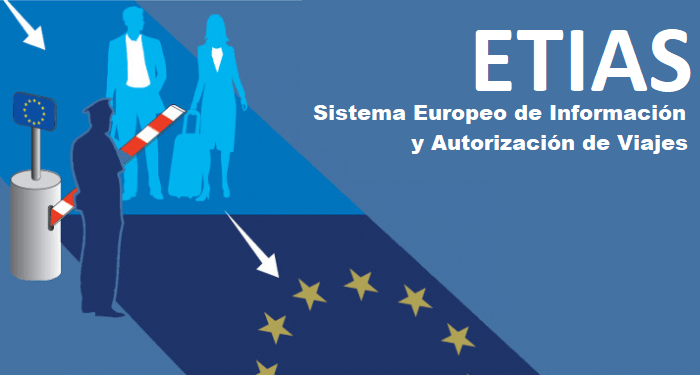
As a traveler planning to visit Spain or other European countries in 2026, understanding the European Travel Information and Authorisation System (ETIAS) is essential. This new travel authorization will become mandatory for visa-exempt travelers starting in late 2026 (specifically Q4 2026, or around October–December). Here’s your comprehensive guide to applying successfully.
What is ETIAS and Why Does It Matter for Spain Travel?
ETIAS is not a visa—it’s an electronic travel authorization similar to the U.S. ESTA or Canada’s eTA. It serves as a pre-screening system to enhance security in the Schengen Area before you arrive. When ETIAS launches, airlines and cruise operators will be required to verify your authorization at check-in; boarding will be denied without valid ETIAS approval.
The authorization is electronically linked to your passport, making it seamless to verify at borders. Importantly, even with approved ETIAS, you’ll still undergo standard border checks upon arrival—ETIAS approval doesn’t guarantee entry, but its absence will prevent you from boarding transportation to Europe.
Critical Timeline for 2026
Launch Timeline: ETIAS is expected to launch in Q4 2026 (October–December 2026). The EU will announce the specific launch date several months in advance.
Grace Period: A 6-month transitional period will follow the launch, during which travelers may still enter without ETIAS, provided they meet all other entry conditions. This is followed by a 6-month grace period for first-time arrivals since the transitional phase ended.
EES (Entry/Exit System): ETIAS implementation depends on the prior launch of the Entry/Exit System (EES), which begins phased rollout in October 2025 with full operational deployment by April 10, 2026. ETIAS won’t launch before EES is fully operational.
Practical Implication: If you’re traveling to Spain in early 2026, ETIAS will not yet be required. However, if you’re traveling between October and December 2026 onward, you’ll need ETIAS authorization, though the grace period may provide flexibility for unaware travelers during initial rollout.
Who Needs ETIAS Authorization?
You need ETIAS if you are:
- A citizen of a visa-exempt country (59+ nations)
- Planning to visit Spain or other Schengen countries for short-term stays only (up to 90 days within any 180-day period)
- Traveling for tourism, business, transit, short-term study, or medical reasons
- Crossing through the airport in international transit (if leaving the transit zone)
You do NOT need ETIAS if you are:
- An EU, Schengen, or EFTA citizen
- A holder of a valid Schengen visa (you need either ETIAS or a visa, not both)
- A holder of a long-stay visa or residence permit for a European country
- A citizen of countries requiring traditional Schengen visas (India, China, Russia, etc.—these travelers apply through regular visa channels, not ETIAS)
Eligible Countries for ETIAS: Citizens of Australia, Brazil, Canada, Chile, Japan, New Zealand, South Korea, United Kingdom, United States, Argentina, and 49+ other visa-exempt nations are eligible.
Step-by-Step Application Process
Step 1: Gather Required Documents (5 minutes)
Before beginning your online application, assemble the following:
Essential Documents:
- Valid Biometric Passport: Must be issued within the last 10 years, valid for at least 3 months beyond your intended departure date from the Schengen Area, and issued by an eligible country. Non-biometric passports will result in rejection.
- Email Address: An active, monitored email address for receiving your ETIAS approval and updates. Check both your inbox and spam folders for official correspondence.
- Credit or Debit Card: For paying the €20 processing fee (Visa, Mastercard, American Express, or other major cards accepted). Ensure your card allows international transactions.
Important Passport Notes:
- ETIAS is passport-specific—if your passport expires or you get a new passport during your 3-year authorization period, you’ll need to apply for a new ETIAS. The authorization cannot be transferred to a replacement passport.
- If your current passport will expire within 3 months of your departure date, renew it before applying; traveling with such a document may result in border refusal even with approved ETIAS.
Step 2: Access the Official ETIAS Website (1 minute)
Critical Security Step: Visit ONLY the official EU ETIAS website, not third-party services claiming to offer ETIAS applications.
The official portal will be announced by the EU prior to Q4 2026 launch and will be the sole authorized application portal. Watch for phishing scams; the official website URL will be confirmed by European authorities.
The application form will be available in multiple languages, including Spanish and English.
Step 3: Complete the ETIAS Application Form (10 minutes)
The application form contains three main sections of questions. Accuracy is critical—errors or omissions can lead to delays or rejection.
Section 1: Personal Information
| Field | Details to Provide |
|---|---|
| Full Name | Exactly as shown on your passport (surname, given name) |
| Date of Birth | Day, month, year |
| Place of Birth | City and country |
| Nationality | Your country of citizenship |
| Sex/Gender | As listed on your passport |
| Passport Number | Exactly as shown on your biometric passport |
| Passport Issue Date | When your current passport was issued |
| Passport Expiration Date | When your current passport expires (ensure it’s at least 3 months beyond your departure) |
Section 2: Travel Details
| Field | Details to Provide |
|---|---|
| First Point of Entry | Which Schengen country you’ll enter first (e.g., Spain for Barcelona entry) |
| Purpose of Visit | Tourism, business, transit, medical, short-term study, visiting family |
| Duration of Stay | Approximate number of days in Europe |
| Contact Information | Email address and phone number (for updates) |
| Accommodation Details | Where you’ll stay (hotel name, address, or similar) |
Section 3: Security and Background Questions
These questions screen for security concerns. Answer truthfully—fraudulent information constitutes grounds for rejection and potential legal consequences.
| Question Type | Examples |
|---|---|
| Criminal History | Have you been convicted of any crimes? |
| Immigration Violations | Have you overstayed any visa or violated entry conditions? |
| Security Risk Assessment | Are you on any no-fly lists or wanted by authorities? |
| Health Concerns | Do you have any communicable diseases that might affect entry? |
| Travel to High-Risk Areas | Have you recently traveled to designated high-risk regions? |
| Fraudulent Documents | Have you ever attempted to use false travel documents? |
Critical Honesty Requirement: You must disclose any criminal convictions, immigration violations, or security concerns. However, having a criminal record doesn’t automatically disqualify you; the system will assess each case individually. Withholding information or providing false answers is grounds for permanent rejection.
Step 4: Review and Submit Your Information (2 minutes)
Before submitting:
- Double-check all information for accuracy and consistency
- Verify passport number and expiration date match your document exactly
- Ensure your email address is correct (this is where your authorization will be sent)
- Confirm all personal details match your passport precisely
- Re-read security answers to ensure accuracy
Submit your completed form. You’ll receive a confirmation receipt with your application number. Save this confirmation email.
Step 5: Pay the ETIAS Processing Fee (3 minutes)
You’ll be directed to a secure payment platform after form submission.
Fee Structure:
- €20 for most adult applicants (ages 18–70)
- Free for applicants under 18 or over 70
- Payment accepted: Visa, Mastercard, American Express, debit cards
Payment Tips:
- Ensure your card allows international transactions to avoid payment failure
- Keep your payment confirmation for your records
- The fee is non-refundable if your application is denied (you cannot re-apply without paying again)
Step 6: Wait for Processing (Minutes to 30 Days)
After submission, the system will process your application through European and International security databases to identify potential security risks.
Processing Timeline:
| Scenario | Timeline |
|---|---|
| Standard approval (no additional checks) | Minutes to 1 hour (most common) |
| Pending status with routine checks | Up to 4 days |
| Extended review required | Up to 14 days if additional information is requested |
| Interview or intensive review | Up to 30 days |
What Happens During Processing: Your information is cross-checked against:
- European security and criminal databases
- No-fly lists (national and international)
- Immigration violation records
- Interpol databases
- Schengen Information System (SIS)
- Previously refused entry records
You’ll receive email updates if additional information is needed. Respond promptly to any requests; failure to respond within specified deadlines may result in rejection.
Step 7: Receive Your ETIAS Authorization (Email)
Upon Approval: You’ll receive an email with your ETIAS authorization confirmation and reference number.
- Print this email as backup, though the authorization is fully digital and linked to your passport
- The authorization is automatically stored in the system and linked to your passport number
- You don’t need to carry a physical document; airlines will verify it electronically at check-in
Authorization Validity:
- Valid for up to 3 years from the approval date, or until your passport expires (whichever comes first)
- Allows multiple entries and exits across all participating countries during this period
- You can travel for up to 90 days within any 180-day period across all ETIAS countries combined
What Happens if Your ETIAS is Denied?
Unfortunately, denials do occur. Understanding the reasons and your options is crucial.
Common Rejection Reasons:
- Invalid or inconsistent personal details (name, date of birth, or passport information mismatches)
- Passport issues (reported as lost, stolen, invalid, or non-biometric)
- Criminal record or security concerns (conviction history, interpol alerts, terrorism connections)
- Previous immigration violations (overstayed visa, illegal entry, deportation)
- Health concerns (communicable disease history)
- Fraudulent or misleading information provided in the application
- Missing required information or incomplete form submission
If Denied: You’ll receive an email explaining the specific reason(s) for refusal, including the authority responsible for the decision.
Appealing an ETIAS Denial
If your application is rejected, you have the right to appeal.
Appeal Process:
- Read the Denial Email Carefully: The notification includes the reason for refusal, the authority responsible, and appeal instructions.
- Contact the ETIAS National Unit: Identify which member state made the decision (listed in your denial notification). Contact that country’s ETIAS National Unit to initiate the appeal.
- Gather Supporting Documentation: Prepare evidence supporting your case:
- If denied for personal detail errors: Updated/corrected information
- If denied for criminal history: Character references or evidence of rehabilitation
- If denied for health concerns: Medical documentation
- If denied for data errors: Documentation proving the error
- Submit Your Appeal: Follow the instructions provided in your denial email. Appeals must be submitted within a specified timeframe (typically several weeks).
- Await Decision: The ETIAS National Unit will review your appeal and respond via email with their determination.
- If Appeal is Unsuccessful: You have limited options:
- You cannot travel to Schengen countries without valid ETIAS or a visa
- In emergencies only (funeral, court appearance, urgent medical treatment), you may request limited-validity ETIAS on humanitarian grounds
- As a last resort, you could apply for a traditional Schengen visa through the relevant country’s consulate
Reapplication Option: If your appeal is unsuccessful but circumstances have changed (e.g., criminal record expunged, corrected documentation obtained), you can reapply after addressing the underlying issue, though you’ll need to pay the €20 fee again.
Countries Where ETIAS is Required
ETIAS is valid for 30 participating countries:
Schengen Area (Core): Austria, Belgium, Czech Republic, Denmark, Estonia, Finland, France, Germany, Greece, Hungary, Italy, Latvia, Lithuania, Luxembourg, Malta, Netherlands, Poland, Portugal, Slovakia, Slovenia, Spain, Sweden
Schengen Area (New Members): Bulgaria, Croatia, Romania
Schengen Associates: Iceland, Liechtenstein, Norway, Switzerland
Non-Schengen EU Member: Cyprus
Microstates (accessible with Schengen clearance): Andorra, Monaco, San Marino, Vatican City
Important: Ireland does not participate in ETIAS and maintains separate entry requirements.
Key Planning Recommendations for Spain Travelers
Booking Strategy: If traveling to Spain before October 2026, ETIAS is not yet required. Apply for ETIAS during the transitional or grace periods (late 2026–2027) according to your travel dates.
For Late 2026 Travel: Apply for ETIAS as soon as the system launches in Q4 2026, even though the grace period may provide flexibility. Avoid last-minute applications to allow processing time.
Combine with Tourist Taxes: Remember that Spain charges tourist taxes of €4–€11 per night in Barcelona (and €2–€4 in the Balearic Islands), so budget these alongside your ETIAS fee.
Combined Planning: When planning your 2026 Spain trip:
- Monitor EU announcements for the exact ETIAS launch date (expected several months before Q4 2026)
- Apply for ETIAS as soon as the system goes live
- Book high-speed train tickets (AVE/Iryo) 60–90 days in advance for best prices
- Reserve accommodations 2–3 months ahead for shoulder seasons
- Account for tourist taxes in your budget across all destinations
Visa Alternatives: If your application is denied and you must travel, contact the Spanish embassy or consulate about obtaining a traditional Schengen visa as an alternative, though this requires in-person appointments and takes significantly longer.
ETIAS represents a modernization of European border security. By understanding the application process, requirements, and timeline, travelers from visa-exempt countries can ensure smooth entry to Spain and other European destinations in 2026 and beyond.